

Masters
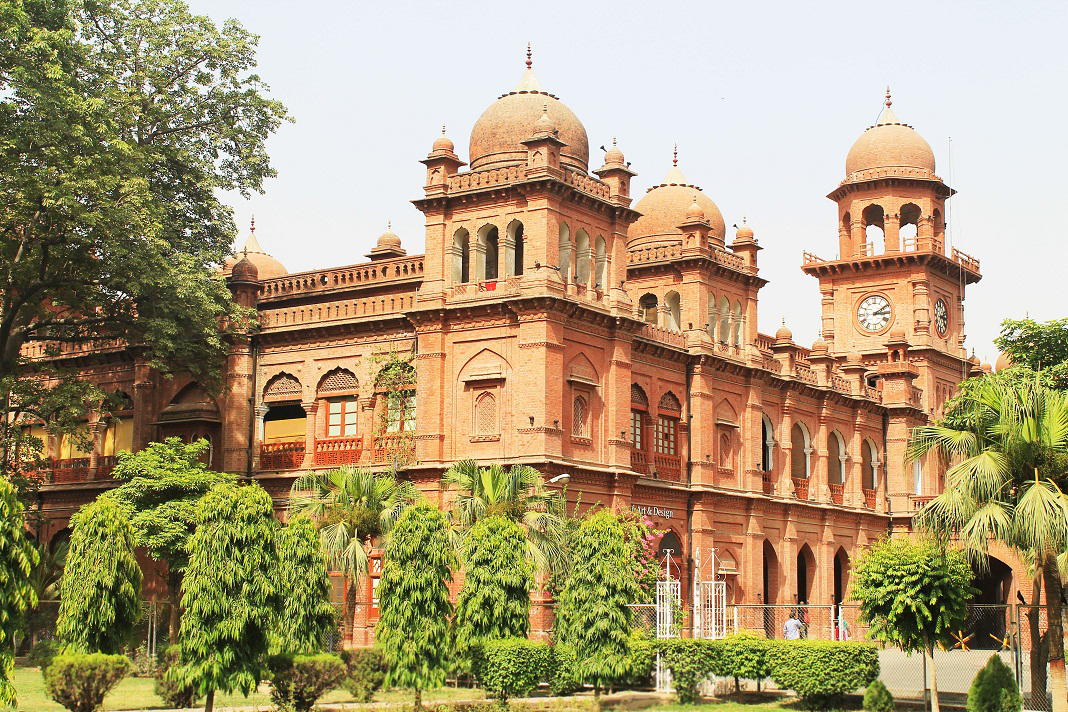
The Department of Soil Science, Faculty of Agricultural Sciences, University of the Punjab, Lahore, is dedicated to excellence in teaching, research, and innovation in soil science. The department offers undergraduate and postgraduate programs that provide students with a strong foundation in soil fertility, plant nutr.

Vision |
|
To be a nationally and internationally recognized center of excellence in soil science education, research, and innovation, producing competent professionals and transformative technologies that promote sustainable soil resource management, precision agriculture, digital agriculture, and food security for the benefit of society. |
|
Mission |
|
The Department of Soil Science is committed to: |
|
1. |
Delivering high-quality education that develops strong theoretical knowledge and practical competencies in soil science, with particular emphasis on soil fertility, plant nutrition, and sustainable agricultural production. |
2. |
Advancing innovative research in soil health, nutrient management, precision agriculture, digital agriculture, and climate-resilient farming to address emerging agricultural challenges. |
3. |
Developing graduates with critical thinking, ethical values, leadership qualities, entrepreneurial skills, and lifelong learning attitudes to serve academia, industry, government, and farming communities. |
4. |
Promoting collaboration with farmers, industry, research organizations, and public institutions to transfer knowledge, develop innovative technologies, and contribute to national agricultural development and environmental sustainability. |
Program Educational Objectives (PEOs) |
|
Within three to five years of graduation, graduates of the BS (Hons.) Agriculture (Soil Science) program will be able to: |
|
PEO-1: Professional Competence |
|
Apply sound knowledge and practical skills in soil science, particularly soil fertility, plant nutrition, soil health, and nutrient management, to solve agricultural and environmental problems in professional settings. |
|
PEO-2: Innovation and Research |
|
Conduct research, adopt emerging technologies, and utilize digital agriculture, precision farming, and modern analytical tools to improve agricultural productivity and sustainable soil management. |
|
PEO-3: Leadership and Professional Development |
|
Demonstrate ethical conduct, effective communication, teamwork, leadership, and entrepreneurial abilities while contributing successfully to academia, government, industry, consultancy, and farming communities. |
|
PEO-4: Lifelong Learning and Sustainable Development |
|
Pursue higher education, continuous professional development, and lifelong learning while promoting environmentally sustainable agricultural practices and responsible management of natural resources. |
|
Program Learning Outcomes (PLOs) |
|
Upon successful completion of the BS (Hons.) Agriculture (Soil Science) program, graduates will be able to: |
|
PLO-1: Soil Science Knowledge |
|
Apply fundamental and advanced knowledge of soil science, including soil chemistry, soil physics, soil biology, soil fertility, and plant nutrition, to agricultural and environmental systems. |
|
PLO-2: Problem Analysis |
|
Identify, formulate, analyze, and solve soil-related problems using scientific principles, critical thinking, and appropriate analytical approaches. |
|
PLO-3: Laboratory and Field Competency |
|
Perform laboratory analyses, field investigations, soil sampling, fertility evaluation, and interpretation of analytical results using standard scientific procedures. |
|
PLO-4: Investigation and Research |
|
Design and conduct experiments, analyze and interpret scientific data, draw evidence-based conclusions, and communicate research findings effectively. |
|
PLO-5: Modern Tools and Digital Agriculture |
|
Utilize modern laboratory instruments, information technology, geographic information systems (GIS), remote sensing, precision agriculture technologies, artificial intelligence, smartphone applications, and digital decision-support tools for soil and crop management. |
|
PLO-6: Sustainable Soil and Nutrient Management |
|
Develop sustainable strategies for improving soil fertility, nutrient use efficiency, environmental protection, and climate-resilient agricultural production. |
|
PLO-7: Environment and Society |
|
Assess the environmental, economic, and societal impacts of soil and agricultural management practices, and recommend sustainable solutions for responsible natural resource management. |
|
PLO-8: Ethics and Professional Responsibility |
|
Demonstrate integrity, ethical conduct, professionalism, and social responsibility while practicing soil science and engaging with stakeholders. |
|
PLO-9: Communication and Teamwork |
|
Communicate scientific information effectively through written, oral, and digital media, and work efficiently as a member or leader of multidisciplinary teams. |
|
PLO-10: Leadership and Entrepreneurship |
|
Apply leadership, project management, innovation, and entrepreneurial skills to develop technologies, consultancy services, and agribusiness solutions that support sustainable agricultural development. |
|
PLO-11: Lifelong Learning |
|
Recognize the need for continuous professional development, independent learning, and adaptation to emerging scientific knowledge and technological advancements. |
|
PLO-12: Community Engagement and Extension |
|
Work collaboratively with farmers, extension agencies, industry, and research organizations to transfer knowledge, promote adoption of improved technologies, and contribute to sustainable agricultural development. |
|
Presently the Department of Soil Science offer a wide range of degree programs.

Chairman / Professor

Assistant Professor
The Department of Soil Science, Faculty of Agricultural Sciences, University of the Punjab, Lahore, is dedicated to excellence in teaching, research, and innovation in soil science. The department offers undergraduate and postgraduate programs that provide students with a strong foundation in soil fertility, plant nutr....
|
Analysis Name |
Cost/samples (PKR) |
|
Drying and sieving of soil sample |
30 |
|
Plant sample drying and grinding |
40 |
|
Soil EC |
30 |
|
Soil pH |
50 |
|
Soil gypsum requirement |
200 |
|
Soil organic matter |
100 |
|
Soil organic carbon |
100 |
|
Soil texture (Hydrometer method) |
200 |
|
Soil and plant digestion for N determination |
200 |
|
N determination from the digest |
200 |
|
Plant digestion for P, K and micronutrient determinaiton |
350 |
|
P determinaiton from soil |
200 |
|
K determiantion from soil |
200 |
|
P determinaiton from digest |
150 |
|
K determiantion from digest |
150 |
|
Dry ashing of plant samples |
300 |
|
Soil respiration |
300 |
|
Irrigation water analysis |
50 |