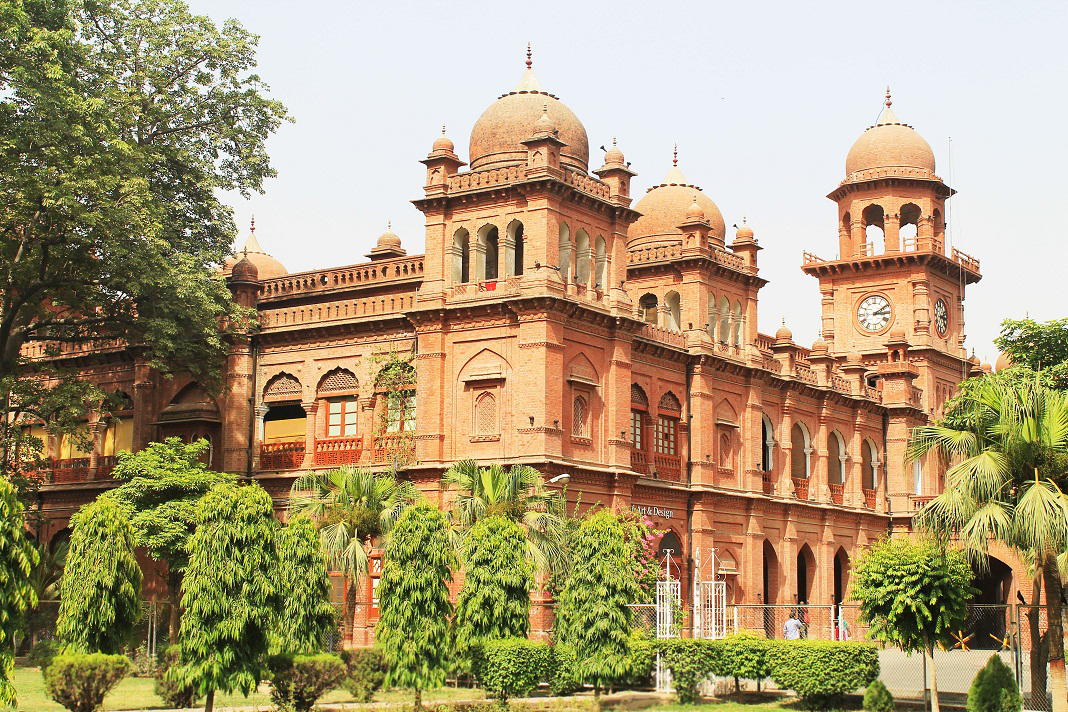
Last Three Year Articles
Year:
2015
1-
Tahir, M., Amin, I., Haider, M.S., Mansoor, S. and Briddon, R.W.,; Ageratum enation virus A begomovirus of weeds with the potneitl to infect crops, Viruses, 7, 2015
2-
Javaid A, Bashir A,; Radish extracts as natural fungicides for management of fusarium oxysporum f. sp. Lycopersici, the caus eof tomato wilt, Pakistan Journal of Botany, 47(SI), 2015
3-
Sana N, Javaid A, Shoaib A, Bajwa R,; Effect of weeds and soil amendments on N,P and K contents of rice. Pakistan, Journal of Botany, 47(SI), 2015
4-
Javaid A, Akhtar R,; Antifungal activity of methanolic root extract of withania sommnifera against pathogen of basal rot disease of onion, African Journal of traditional complementary and alternative mediciens, 12(5), 2015
5-
Samad A, Javaid A,; Cause of eucalyptus citriodora hook diebeck in Pakistan, Pakistan journal of phytopathology, 27(2), 2015
6-
Sana N, Shoaib A, Javaid A, Nafisa,; Effect of neem leaves as soil amendment on southern blight disease, growth, Pakistan Journal of Phytopathology, 27(2), 2015
7-
Sana N, Javaid A, Shoaib A, Khan KA,; Hytochemical management of collar rot of chili with leaf biomass of eucalyput camaldulensis, Pakistan journal of phytopathology, 27(2), 2015
8-
Shazia Shafique, Muhammad Asif and Sobiya Shafique,; Management of fusarium oxysporum F. Sp. Capsici by leaf extract of eucalyptus citribodora, Pak. J.Bot., 47(3), 2015
9-
Shazia Shafique, Sobiya Shafique and Arooj Yousuf,; Bioefficacy of extract of ageratum conyzodies to control drechslera australiensis and dreshslera holmii, Pakistan journal of phytopathology, 27(2), 2015
10-
Shazia Shafique, Sobiya Shafique and Aqeel Ahmad,; Evaluation of the effect of different carrier materials on viability and resistance induction potential of penicillium oxalicum, Pakistan journal of phytopathology, 27(2), 2015
11-
Muhammad Ashfaq, Muhammad Shakil Shaukat, Muhammad Akhter, Muhammad Saleem Haider, Urooj Mubashar and Syed Bilal Hussain,; Comparison of fungal diversity of local and exotic rice (Oryza sativa I.) germplasm for their seed health, The Journal of animal and plant sciences, 25(5), 2015
12-
Ashfaq M, Haider MS, Saleem I, Ali M, Ali A, Cholan SA,; Basmati-rice a class apart (A review), J Rice Res., 3(4), 2015
13-
Muhammad Ashfaq, Hafiz Umar Farooq, Muhammad Sabar, Amna Ali & Muhammad Ali,; Molecular Screening of aroma genes in indigenous and exotic rice germplasm, Biologia, 61(2), 2015
14-
Amna Ali, Naureen Akhtar, Uzma Bashir, Muhamamd Saleem Haider,; Isolation and characterization of bacterial unknows from dairy products sold at local markets of Lahore Pakistan, Biologia, 61(2), 2015
15-
Rahila Hafiz, Naureen Akhtar, Amna Shoaib, Muhammad Saleem Haider, Uzma Bashir, Zoia Arshad Awan,; First report of geotrichum candidum from Pakistan causing posharvest sourt rot of loquat(Eriodotrya japonica), Pakistan Journal of animal and plant sciences, 25(6), 2015
16-
Amna Shoaib, Sundus Akhtar and Naureen Akhtar,; Copper tolerance, protein and catalytic activity in photopathogenic fungs alternaria alternate, Global NEST, 17(4), 2015
17-
Naureen Akhtar, Amna Shoaib and Tehmina Hanif,; Effects of pesticides on non target soil fungi, Pakistan journal of phytopathology, 27(1), 2015
18-
Naureen Akhtar,; Collection of alternaria alternata (Fr.) keissl. In first fungal culture bank of pakistan, Pakistan journal of phytopathology, 27(1), 2015
19-
Aqsa Aftab, Amna Shoaib, Naureen Akhtar, Nafisa Farooq,; Assessment of physoilogical changes in alternaria destruenisinfected canola plants, Pakistan journal of phytopathology, 27(1), 2015
20-
Naureen Akhtar,; Green florescent protein as an indicator to monitor membrance protein overexpression in bacteria, Journal of life sciences and technologies, 3(1), 2015
21-
Naureen Akhtar, James R. Kinghorn,
Anthony, D.M. Glass, Shiela E. Unkle and Duncan A. Rouch ,; High affinity nitrate/ nitrite transporters nrtA and nrtB of apergillus nidulans exhibit high specificity and different inhibition profiles, Microbiology, 161, 2015
22-
Muhammad Nasir Subhani, Shahbaz Talib, Sahi, Abdul Rehman and Waqas Wakil,; Efficacy of fungicides against late blight of potato inticed by Phytophthora infestans (Mont.) de bary, Acad. Res.J.Agric. Sci. Res, 3(9), 2015
23-
Muhammad Nasir Subhani, Shahbaz Talib Sahi, Abdul Rehman and Waqas Wakil,; Effect of blight caused by photohthora infestans (Mont.) de bary on calcium content in leaves of advanced potato lines/cultivars, Acad. Res. J.Agric. Sci. Res, 3(9), 2015
24-
Muhammad Nasir Subhani,; Isolation and efficacy of fungicides and homeo-fungicides against anthracnose of chilies caused by colletotrichum capsici, Akistan Jouranl of Nutrition, 14(6), 2015
25-
Muhammad Nasir Subhani, Shahbaz Talib Sahi, Liaqat Ali, Abdul Rehmanand Waqas Wakil,; Genotypic variants in potassium contents of potato leaves infested with late blight of potato incited by phtophthora infestans (mont. ( de bary, Journal of enviornmental & Agricultural Sciences, 2(6), 2015
26-
Nawaz, H., N. Hussain, A. Yasmeen, M. Arif, M. Hussai, M.I.A. Rehmani, M.B. Chattha and A. Ahmad,; Soil applied zinc ensures high production and net returns of diveregnet wheat cultivars, J. Environ and Agri. Sci., 2(1), 2015
27-
S.A. Manzoor, S.N. Mirza, M. Zubair, Wo.Nouman, S.B. Hussain, S. Mehmood, A. Irshad, N. Sarwar, A. Ammar, M.F. Iqbal, A. Asim, M.U. Chattha, M.B. Chattha, A. Zafar and R. Abid,; Estimating genetic potential of biofuel forest hardwoods to withstand metal toxicity in industrial effluent under dry tropical conditions, Genet. Mol. Res, 14(3), 2015
28-
Nawaz, M., S. Khan, M.U. Chattha, M. Khan and M. Bilal,; Interactive effect of sowing techniqes and weed crop competitions periods on the perfrmance of spring planted sugarcane (Saccharum officinarum L.), Int. J. Mod. Agric, 4(3), 2015
29-
Muhammad Saqib, M. Ijaz, S. Ali, M. Latif, M. Ahmad, N. Akbar,; The effect of different weed mangement strategies on the growth and yield of direct seeded dry rice (Oryza sativa L.), Planta Daninha, , 2015
30-
Sajid Ali, M. Shahbaz, A.N. Shahzad, H.A.A. Khan, M. Anees, M.S. Haider and A. Fatima,; Impact of coper toxicity on stone head cabbage (Brassica Oleracea var. capitata) in hydroponics, PeerJ, , 2015
31-
Muhammad Ijaz, M.A.S. Raza, S. Ali, K. Ghazi, T.A. Yasir, M. Saqib and M. Naeem,; Differential planging density influences growth and yield of hybrid Maiza (Zea mays L.), J.Env.Agric.Sci, 2(3), 2015
32-
Abid Ilyas Dar, M. Ahmad, J Khan and S.Ali,; Borwon application improves the performance of fine grains rice cultivar, International Conference on soil sustainability for food security, , 2015
33-
Sajid Ali, B. Honermeier, A. Fatima, H.,A. A. Khan and M. Anees,; Post emergence application of herbicides alters the chlorphyII contents in artichoke ( cynara cardunculus L.), International plant protection conference, Berlin, Germany, , 2015
34-
Hafiz Azhar Ali Khan T. Khan and S. Ali,; Persistence and toxicity of spinosad on wheat and rice grains against rhyzopertha dominica and tribolium castaneum, International plant protection conference, Berlin, Germany, , 2015
35-
Farooq, Q., M. Arshad and M.A. Mehmood,; Effect of chemicals on keeping quality and vase life of carnation of dianthus caryophyllus L.) eskimo, Hortscience, 50(9), 2015
Year:
2014
1-
Javed A., Akram, W., Shoaib, A., Haider , M.S., and Ahmad, A.,; ISSR analysis of genetic diversity in dalbergia sissoo in Punjab, Pakistan, Pak. J.Bot.,, 46(5), 2014
2-
Ali, M., Ashfaq, M., Rana, N., Haider, M.S., Asfhaq, M. and Amjad, A,; The susceptibility study of some auberging (Solamum melongena L.) cultivars against jassid (Amrasca biguttula biguttula (ISHIDA), Pak. J. Agri.Sci, 51(3), 2014
3-
Mushtaq, S., Shamim, F., Shafique, M. and Haider, M.S,; Effect of whitefly transmitted geminiviruses on the physiology of tomato (Lycopersicon esculentum L.) and tobacco (Nicotiana benthamiana L.) plants, Journal of Natural Sciences Research, 4(9), 2014
4-
Ali, A., Haider, M.S. and Ashfaq, M,; Effect of culture filtrates of trichoderma spp., on seed germination and seedling growth in chickpea-An in vitro study, Pakistan Journal of Phytopathology, 26(01), 2014
5-
Ashfaq, M., Ali, A., Haider, M.S. Ali, M., Abdullah, M. And Mubashar, U.,,; A role of weed solvents on seed priming of diverse rice germplasm lines, Journal of Pure & Applied Microbiology, 8(3), 2014
6-
Ashfaq, M., Haider, M.S., Khan, A.S., Ali, M., Ali, A. and Mubashar, U,; Breeding for micronutrient improvements in rice (Oryza sativa L.) for better human health, Journal of food, agriculture & enviornment, 12(2), 2014
7-
Matin A., Jung SYUI, Khan SN,; In vitro assessment of cytokinesis interactions with balamuthia mandrillaris using human brain microvascular endothelial cell, Pak. J. Pharm.Sci, 27(1), 2014
8-
Waheed Akram, Tehmina Anjum, Aqeel Ahmad and Rabia Moeen,; First report of curvularia lunata causing leaf spots on sorghumbicolor from Pakistan, Plant disease, 98(7), 2014
9-
Wajeeha Irum,Tehmina Anju, Mateen Abbas and Abdul Muqeet Khan,; Aflatoxins and orchratoxin a in maize of Punjab, Pakistan, Food additives & Contaminants Part B Surveillance, 7(1), 2014
10-
Rabia Moeen Waheed Akram and Tehmina Anjum,; Biochemical and molecular basis of resistance in sorghum against curvularia leaf spot disease, International journal of agriculture and biology, 16(5), 2014
11-
Waheed Akram, Tehmina Anjum and Aqeel Ahmad,; Basal susceptibility of tomato varieties aainst different isolated of F. oxysporum f. sp. Lycopersici, International Journal of Agriculture and Biology, 16(1), 2014
12-
Tehmina Anjum and Waheed Akram,; First record of acremonium with in tomato from Pakistan, Plant disease, 98(1), 2014
13-
Akbar M, Javaid A, Ahmad E, Javed T, Clary J,; Holadysenterine, a natural herbicidal constituent from drechslera australiensis for management of rumex dentatus, Journal of Agriculture and Horticulutre, 62(2), 2014
14-
Javaid A, Iqbal D,; Management of collar rot of bell pepper (capsicum annuum L.) by extracts and dry biomass of coronopus didymus shoot, Biological agriculture and horticulture, 30(3), 2014
15-
Nadeem SM, Ahmad M, Zahir ZA, Javaid A, Ashraf M,; The role of mycorrhizae and plant growth promoting rhizobacteria (PGPR) in improving crop productivity under stressful environments, Biotechnology Advances, 32, 2014
16-
Jabeen N, Javaid A, Ahmed E, Sharif A,; Management of causal organism of collar rot of bell pepper (Sclerotium rolfsii) by organic solvents extracts of Datura metel fruit, Pakistan Journal of Phytopathology, 26(1), 2014
17-
Javaid A, Afzal L, Bashir A, Shoaib A,; In vitro screeing of trichoderma species against macrophomina phaseolina and fusarium oxysporum f. sp. Lycopersici, Pakistan Journal of Phytopathology, 26(1), 2014
18-
Javaid A, Shoaib A, Bashir U, Akthar R,; Screening of varius species of aspergilus for herbicidal activity against partheium weed, Pakistan Journal of Weed Science research, 20(2), 2014
19-
N. Sana, Bajwa, R, Javaid A, Shoaib A,; Effect of N-fertilizer and farmyard manure on weed competition in rice, Pakistan Journal of Weed Science research, 20(2), 2014
20-
S. Javed, Javaid A, Shoaib A,; Herbicidal activity of some medicinal plants extracts against parthernium hysterophorus L., Pakistan Journal of Weed Science research, 20(3), 2014
21-
S. Akhtar and Shoaib A,; Toxic effect of arsenate on germination, early growth and bioaccumulation in wheat (Titicum aestivum L.), Pakistan Journal of Weed Science research, 51(3), 2014
22-
A. Nuareen,Awan ZA and Shoaib A,; First report of new pst harvest rot in ginger rhizome by aspergillus parvisclerotigenus in Pakistan, Plant disease report, 98(8), 2014
23-
A. Shoaib,Aslam A and Aslam N,; Adsorption of Cr (III) ions though efficient and eco-friendly adsorbents, The Journal of animal and plant sciences, 24(4), 2014
24-
S. Khurshid, Shoaib A Javaid A,; In vitro toxicity evaluation of culture filtrates of fusarium oxysporum f. sp. Lycopersici to growth and physiology of tomato under chromium (VI( stress, The Journal of animal and plant sciences, 24(4), 2014
25-
Akhtar N, Shoaib A, Munir S. Ali and Khurshid S,; Poyphasic taxonomic differentation of varius isolated of aspergillus niger, a nasty postharvest pathogen, The Journal of animal and plant sciences, 24(5), 2014
26-
N. Akhtar, Shoaib A, Nafisa, Aftab A,; Identification and in vitro control of canola spot disease pathogen, Pakistan Journal of Phytopathology, 26(1), 2014
27-
Aqeel Ahmed, Sobiya Shafique, Shazia Shafique and Washeed Akram,; Penicillium oxalicum directed systemic resistance in tomato against alternaria alternate, Acta Physiologiae plantarum, 36(5), 2014
28-
Tahir Mehmood, Sobiya Shafique, Shazia Shafique and Zunera Zaheer,; Fungitoxic potential of tagetes erectus for the mangement of alternaria alternata strains of tomato, Pakistan Journal of Botany, 46(3), 2014
29-
Aqeel Ahmed, Shazia Shafique and Sobiya Shafique,; Intracellular interactions involved in induced systemic resistance in tomato, Scientia horticulturae, 176, 2014
30-
Aqeel Ahmed, Sobiya Shafique, And Shazia Shafique,; Molecular basis of antifungal resistance in tomato varieties, Pakistan Journal of agricultural sciences, 51(3), 2014
31-
Sobiya Shafique, Waheed Akram, Tehmina Anju, Aqeel Ahmad and Shazia Shafique,; Comparative stidies on phytochemistry, antibacterial and antifungal propeties of alstonia scholaris and milettia pinnata, Australasian plant disease notes, 9(1), 2014
32-
M. Aqueel, C,M Collins, A, M, Raza, S, Ahmad, M, Tariq, and S, R. Leather,; Effect of plant nutrition on aphid size, prey consumption, and life history characteristics of green lacwing, Insect science, 21(01), 2014
33-
H.M. K. Abbas, M.A. Farooq, S., Ata, M.N. Subhani, M.S. Haider and S. Ali,; Evaulation of different sugar beet varieties against fusarium oxysporum and alternaria alternate, Pak. J. Phytopath, 26(1), 2014
34-
R. Mahmood, A.A. Shahid, A Usmani, M.S. Haider and S Ali,; Nitrification inhibition potential of various leaf extracts, The Philippine agricultural scientist, 97(3), 2014
35-
Amna Ali Muhammad Saleem Haider and Muhamamd Ashfaq,; Bacterial diversity in some selected agricutural food products, Bangladesh J. Bot, 43(2), 2014
36-
Amna Ali, Muhammad Saleem Haider, Sana Hanif and Nosheen Akthar,; Assessment of the antibacterial activity of cuscuta pedicellata ledeb, African Journal of biotechnology, 13(3), 2014
37-
Mehreen Hassan and Sana Hanif,; Physical, chemical and microbiological analysis of the water quality of rawal lake, Int. J. Agril. Res. Innov. & Tech., 4(1), 2014
Year:
2013
1-
Manzor M T; Ilyas M; Shafiq M; Haider M S; Shahid A a and Briddon R W,; A distinct strain of chickpea cholorotic dwarf virus (genus Mastrevirus, family Geminivirdate) identified in cotton plants affected by leaf curl disease, Archives of Virology, , 2013
2-
W. Anwar, M. Shafiq, M.S. Haidr, A. Bibi and S.N. Khan,; First report of Cochliobolus australiensis causing leaf spot of bermudagrass in Pakistan, Journal of Plant Pathology, 95(2), 2013
3-
Khan HAA, Shad SA, Akram W,; Resistance to new insecticides in Musca domestica L. from daries in Punjab, Pakistan, Parasitology Research, 112, 2013
4-
Khan HAA, Akram W, Shad SA,; A cross sectional survey of knowledge, attitude and practices related to house flies among dairy farmers in Punjab, Pakistan, Journal of ethnobiology and ehtnomedicine, 9, 2013
5-
Khan HAA, Akram W, Shad SA,; Resistance to conventional insecticides in Musca domestica L. From daries in Punjab, Pakistan, Ecotoxicology, 22, 2013
6-
Dhileepan, K., Taylor, D.B.J., McCarthy, J., Kng, A. Shabbir, A.,; Development of cat's claw creeeper leaf tying moth hypocosmia pyrochorma (Lepidoptera: Pyralidae) at different temperatures: Implications for establishment as a biological control agent in Australia and South Africa, Biological Control, 67, 2013
7-
Shabbir, A,. Dhileepan, K, O'Donnell, C., Adkns, SW,; Complementing Biological control with plant suppression: Implications for improved management of parthernium weed( Parthenium hysterophorus L.), Biological Control, 64(3), 2013
8-
Shahida Afzaal, Muhammad Numan, Zafar ul Ahsan Qureshi, Munazza Shaukat, Imtiaz Ahmad Khan, Zaheer Hussain, Zain ul Abidin, Abdul Whab Manzoor, Mudasser Habib,; Ante-Mortem Diagnosis of Rabies in Cows and Buffaloes, Journal of Advanced veterinary research, 3, 2013
9-
Mahmood, N., T. Ali, M.S. Bajwa, M. Shahbaz and M.B. Chattha,; Analysis of the adoption of wheat sowing recommendations among small farmers using water saving interventions, J.Animal and Pi.Sci, 23(1), 2013
10-
Muhammad Ashfaq, Muhammad Saleem Haider, Abdus Salam Khan and Sami Ui Allah,; Heterosis Breeding for various morphological traits of basmati rice germplasm to devlop new rice varieties under water stree conditions, The journal of animal and plant sciences, 23(4), 2013
11-
Muhammad Ashfaq, Amna Ali, Sana Siddique, Muhammad Saleem Haider, Muhammad Ali and Syed Bilal Hussain,; in-vitro Antibacterial activity of Parhternium hysterohorus against isolated bacterial species from discolored riece grains, International Journal of Agriculture and Biology, 15(6), 2013
12-
Shazia Shafique, Arshad Javaid and Sobiya Shafique,; Management of litteleseed Canarygrass (Phalaris minor Retz.) by extracts and dry leaf biomass of partherium hysterophorus L.), Philippine Agricultureal scientist, 96(4), 2013
13-
Zoobia Bashir, Shazia Shafique, Aqeel Ahmad, Tehmia Anjum, Sobiya Shafiqu and Waheed Akram,; Quantification of Cellulose Contents by Transmission of spectra f plant tissues, Cellulose chemistry and technology, 47, 2013
14-
Mukhtar Hussain Shah, Salik Nawaz Khan, Uzma Bashir and Rukhsana Bajwa,; Allelopathy of rice: effect of rice mulching on the growth of avena sativa, Sci, tech. and develoment, 32(3), 2013
15-
A. Shaoib, Aslam N. Athar M.M. Akhtar S. Nafisa and K. Saba,; Removal of Cr(VI) ions through bread mold fungus, Polish Journal environmental studies, 22(4), 2013
16-
A. Shaob, Aslam N and Aslam N.,; Trichoderma harzianum: dsorption, desorption, isotherm and FTIR studies, The journal of animal and plant sciences, 23(5), 2013
17-
Nafisa, Shoaib A and Javaid A,; Growth of Pisum Sativum under single or combined action of Sclerotium rolfsii and copper [Cu(II)], International Journal of Agriculture and Biology, 15, 2013
18-
Zaheer Ahmad Nasir, Ian Colbeck, Zulfiqar Ali and Shakil Ahmad,; Indoor particulate matter in developing countries; a case study in Pakistan and potnetial intervention strategies, Environmental research letters, 8, 2013
19-
Akbar M, Javaid A,; Prospects of using fungal metabolites for the management of Rumex dentatus, a problematic weed of wheat, International Journal of Agriculture and Biology, 15(6), 2013
20-
Tehmina Anjum, Waheed Akram, Aqeel Ahmad, Mazhar Hussain, Hina Aslma and Sabin Fatimah,; An insight into the basis of resistance in sorghum bicolor against colletorichum sublineolum, Africal Journal of microbiology research, 7(15), 2013
21-
Waheed Akram, Tehmia Anjum, Basharat Ali, Aqeel Ahmad,; Screening of native bacillus strains to induce systemic resistance in tomato plants against Fusarium wilt in split root system and its field appliations, International Journal of Agriculture and Biology, 15, 2013
22-
Nosheen Akhtar, Tehmina Anjum an Rasheda Jabeen,; Isolation and identification of storage fungi from citrus sampled from major growing areas of Punjab, Pakistan, International Journal of Agriculture and Biology, 15, 2013
23-
Azam S; Samiullah T R, Yasmeen A, Salah ud Din; Iqbal A; Rao A Q; Nasir I A; Rashid B; Shahid AA; Ahmad M and Husnain T ,; Dissemination of Bt cotton in cotton growing belt of Pakistan, Advancements in Life Sciences, 1(1), 2013
24-
Basu M M;Gonzalez-Carranza Z H; Ali S A; Tang S; Shahid A A; and Roberts JA,; The manipulation of auxin in the abscission zone cells of arabidopsis flowers reveals that indoleacetic acid signaling is a prerequisite for organ shedding, Plant Physiology, 162, 2013
25-
Iftikhar S; Shahid A A; Javed S; Nasir I A; Tabassum B and Haider M S.,; Essential oils and latices as novel antiviral agent against potato leaf roll virus and analysis of their phytochemical constituents responsible for antiviral activity , Journal of Agricultre Science, 5(7), 2013
26-
Ali, M., Ashfaq, M., Haider, M>S., Ashfaq, M. and Anjum, F,; Biochemical characters of eggplant (Solanum melongena L.) leaves and their correlation with the fluctuations of jassid(Amrasca biguttula biguttula (Ishida) populations, XV EUCARPIA
Meeting on genetics and breeding of capsicum and eggplant' held at Torino, Italy, , 2013
27-
Ali, A., Haider, M.S. and Hanif, S.,; Bio-control assays of plant pathogenic bacteria with different solvents of datura alba nees, Pak. J Weed Sci. Res, 19(3), 2013
28-
W. Anwar, M. Shafiq, M., S. Haider, A. Bibi, and S.N. Khan,; Cochilobolus australiensis causing leaf spot of Turfgrasses in Pakistan, Journal of Plant Pathology, 95, 2013
29-
Hafiz Azhar Ali Khan, Waseem Akram,; Citrus-based essential oils could be used for dengue vector mosquitoes control, Asian Pacific Journal of Tropical Medicine, 6, 2013
30-
Khurram Zia, Faisal Hafeez, Hamid Bashir, Bilal Saeed Khan Hafiz Azhar Ali Khan,; Severity of cotton whitefly(Bemisia tabaci Genn.) Population with special reference to abiotic factors, Pakistan Journal of Agriculture, 50, 2013
31-
Hafiz Azhar Ali Khan, Waseem Akram, M. Ahsan Khan,; Mango leaf gall formation: varietal susceptibility and within tree distribution, Pakistan Journal of Agricultural Sciences, 50, 2013
32-
Haiz Azhar Ali Khan, Sarfraz A. Shad, Waseem Akram, Jong-Jin Lee,; Insecticide mixtures could enhance the toxicity of insecticides in a resistance population of Musca domestica L., PLOS ONE, 8, 2013
33-
Hafiz Azhar Ai Khan, Sarfraz A. Shad, Waseem Akram,; Resistance to new chemical insecticides in the house fly, Musca domestica L, from dairies in Punjab, Pakistan, Parasitology Research, 112, 2013
34-
Hafiz Azhar Ali Khan, Waseem Akram, Sarfraz A. Shad,; Resistance to conventional insecticides in Musca domestica L. from dairies in Punjab, Pakistan, Ecotoxicology, 22, 2013
35-
Shinawar Waseem Ali, Muhammad Saleem Haider, Muhammad Riaz and Muhammad Hassan Mushtaq,; Decontaminating mycotoxins in agricultural produce following bioremediation approach, 2nd Internatinal conference on Agriculutre for life, Life for Agriculture, University of Agronomic Sciences and Veterinary Medicines, Bucharest, Romania, , 2013
36-
Fang-Bo Yu, Shinawar Waseem Ali, Xiao-Bo Fang, Sheng-Dao Shan and Li-Bo Guan,; Identification and characterization of four bacterial strains isolated from a bioaugmented sequencing batch reactor, Journal of General and Applied Micrbiology, 59, 2013
37-
Muhammad Bilal Chattha, N. Mahmood, T. Ali, M.S. Bajwa, M. Shahbaz,; Analysis of the adopton of wheat sowing recommundations among small farmers using water saving interventions, The Journal of Animal & Plant Sciences, 23(1), 2013
38-
Muhammad Ashfaq, Muhammad Slaeem Haideri and Abdus Salam Khan,; Genetic potential of the Basmati rice Germplasm for development of Drought Tolerant Varieties, Internatinal Symposium on Agriculture. Faculty of Agriculutre, University of Josip Juraj Strossmayer in Osijek Dubrovnik Crotia), , 2013
39-
Aqeel Ahmad, Shazia Shafique and Sobiya Shafique,; Cytological and Physiological basis for tomato varietal resistance against alternaria altrnate, Journal of the Science of Food and Agriculture, 93, 2013
40-
Raza HM, Rizvi NA, Siddiqui HL, Javaid A, Iqbal M,; Synthesis and biological evaluation of new [1,3,4]thiadiazepino[7,6-b]quinolin-2-amines as potent anit-microbial agents, Medicinal Chemistry Research, 22(8), 2013
41-
Iqbal SM, Javaid A, Bakhsh A, Ahmad M,; Molecular characterization of pea for resistance to Pseudomonas syringae pv pisi, International Journal of Agriculture and Biology, 15(4), 2013
42-
Rauf S, Javaid A,; Antiffungal actvity of different extracts of Chenopodium album against Fusarium oxysporum F.S. cepate the cause of onion bast rot, International Journal of Agriculture and Biology, 15(2), 2013
43-
Javaid A, Shafique G, Ali S, Shoaib A,; Effect of culture medium on herbicidal poetential of metabolites of Trichoderma species against Parthenium hysterophorus, International Journal of Agriculture and Biology, 15(1), 2013
44-
Ilyas M, Nawaz, K, Shafiq M, Haider M S and Shahid A A,; Complete nucleotide sequences of two begomoviruses infecting Madagascar periwinkle (Catharanthus roseus) from Pakistan, Archives of Virolog, 158, 2013
45-
Khokhar, I, Haider M.S., Ashfaq, M., Mukhtar, I., Ali, A and Mushtaq, S.,,; Effect of Penicillium species culture filtrate on seedling growth of wheat, International Research Journal of Agricultural Science and Soil Science, 3(1), 2013
46-
Ali, A., Haider, M.S., Hanif, S., Akhtar, N. and Ashfaq, M,; Bio-control of bacterial species isolated from diseased citrus fruts by methanolic extracts of weeds in vitro, European Journal of Experimental Biology, 3(1), 2013
47-
Haider MS., Hussain Z., Qureshi Z.U. A, andres Velasco Villa, Afzal S. and Xiang WU. ,; Development of Genetically Recombinant Rabies Vaccine, Journal of Antivirals and Antiretrovirals, 4(4), 2013
48-
Ashraf, M.A, Shahid, A.A., Mohamed, B.B., Dahab, A.A., Bajwa, K.S., Rao, A.Q., Khan, M.A.U, Ilyas, M, Haider, M.S. and Husnain, T.,; Molecular characterization and phylogenetic analysis of a variant of highly infectious cotton leaf curl Burewala virus associated with CLCuD from Pakistan, Australian Journal of Crop Science, 7(8), 2013
49-
Iftikhar S., Shahid, A.A., Javed, S., Hasir, I.A., Tabassum, B. and Haider, M.S.,,; Essential oils and lattices as novel antiviral agent against potato leaf roll virus and analysis of their phytochemical constituents responsible for antiviral activity, Journal of Agricultrual Sciences, 5(7), 2013
50-
Ali, S.W., Yu, F.B, Haider, M.S., Yan, X. and Li, S.P.,; Phenotypic and Phylogenetic characterization of an abamectin degrading bacterial strain isolated from a citrus orchard, J.Gen. Appl. Micrbiology, 59, 2013
Year:
2012
1-
Shinawar Waseem Ali, Fang-Bo Yu, Lian-Tai Li, Xiao-Hui Li, Li-Feng Gu, Jiang Jian-dong and Shun Pen Li,; Studies revealing bioremediation potential of the strain burkholderia sp. GB-01 for abamectin contaminated soils, World Journal of Micrbiology and Biotechnology, 28, 2012
2-
Chang Liu, Shinawar Waseem Ali, Li-Bo Guan, Fang-Bo Yu, Shun-Peng Li, and M.H. Wong,; Biotreatment of o-nitrobenzaldehyde manufacturing wastewater and changes in activated slude flocs in a sequencing batch reactor, Bioresource Technology, 104, 2012
3-
Soybia Shafique, Ruqeyah Abdl Majeed, shazia Shafique,; Cymbopogon Citrates: A remedy to control selected alternaria species, Journal of Medicinal plants research, 6(10), 2012
4-
Shazia Shafique, Arooj Yousuf and Sobiya Shafique,; Bioefficacy of extract of Ageratum conyzoides to control Drechlera australiensis and Drechslera holmii, Pakistan Journal of Botany, In Press, 2012
5-
Zunaira Zaheer, Shazia Shafique, Sobiya Shafique, Tahir Mehmood,; Evaluation of pathogenic potential and genetic characterization of Fusarium solani: A Cause of Fusarium wilt in potato, African Jounal of Microbiology Research, 6(8), 2012
6-
Asma Murtaza, Shazia Shafique, Tehmina Anju, Sobyia Shafique,; In vitro control of alternaria citri using antifungal potential os trichoderma species, African Journal of Biotechnology, 11(42), 2012
7-
Zunera Zaheer, Shazia Shafique, Sobiya Shafique, Tahir Mehmood,; Antifungal potential of Parthenium hysterophorus L. plant extracts against Fusarium Solani, Scientific Research and Essay, 7(22), 2012
8-
Uzma Bashir Sidra Javed and Muhammad Shafiq,; Investigation of genetic variability among different isolats of Fusarium solani, African Journal of Micrbiology Resarch, 6(24), 2012
9-
Sidra Javed and Uzma Bashir,; Antifungal activity of different extracts of Ageratum conyzodies for the management of Fusarum solan, African Journal of Biotechnology, 11(49), 2012
10-
Muhammad Tariq Manzoor, Amna Shoaib and Rukhsana Bajwa,; Mycoremediation of Cu(II) and Ni(II), African Journal of Micrbiology Research, Vol 6(2), 2012
11-
Shakil Ahmed, Noor Zaman and Salik Nawaz Khan,; Management of root rot disease of groundnut
(Arachis hypogease L.) by Plant extracts, African Journal of Micrbiology Research, Vol.6(2), 2012
12-
Shaikl Ahmad, Noor Zaman and Salik Nawaz Khan,; Response of groundnut genotypes against root rot disease in district mianwali, Pakistan Journal of Botany, 44, 2012
13-
Drakshan Iqbal, Arshad Javaid,; Bioassays guided fractionation of Coronopus didymus for its antifungal activity against sclerotium rolfsii, Natural Product Research, 26(17), 2012
14-
Arshad Javaid, Sara Samad,; Screening of allelopathic trees for their antifungal poetnail against alternaria alternata stains isolated from dying back eucalyptus spp., Natural Product Research, 26(18), 2012
15-
Arshad Javaid, Amna Saddique,; Control of charcoal rot fungus macrophomina phaseolina by exrtracts of Datura metel, Natural Product Research, 26(18), 2012
16-
N Maraki, Isiddiqui, Hrizwana, A Javaid,; New disease report of Alternaria alternata on spinach in Saudi Arabia, Journal of Animal and Plant Sciences, 22(1), 2012
17-
N Marraiki, I Siddiqui, H Rizwana, A Javaid,; First report of alternaria alternata leaf spots on spinach in Saudi Arabia, Journal of Animal and Plant Sciencs, 22(1), 2012
18-
Arshad Javaid, Tariq Riaz,; Parthenium hysterophorus L., and alien invasive weed threatening natural vegetations in Punjab, Pakistan, Pakistan Journal of Botany, 44:(Sup.2), 2012
19-
M Imran, A sShakeel, FM Azhar J Farooq, MF Saleem, A Saeed, W Nazeer, M Riaz, M Naeem, A Javaid,; Combining ability analysis for withinboll yield components in upland cotton (Gossyppium hirsutum L.), Genetics and Molecular Research, 11(3), 2012
20-
Muhammad Akbar, Arshad Javaid,; Evaluation of herbicidal potential of fungal metabolites against phalaris minor, African Journal of Micrbiology Research, 6(18), 2012
21-
Arhsad Javaid, Syeda Fakehha Naqvi, Amna Shoaib,; Antifungal activity of methanolic extracts of Sorghum halepense aainst macrophomina phaseolina, African Journal of Micrbiology Research, 6(28), 2012
22-
Syeda Fakehha Naqvi, Arshad Javaid Amna Shoaib,; Evaluation of antifungal activity of methanolic extracts of Dicanthium annulatum for the management of Macrophomina phaseolina, African Jounal of Microbiology Research, 6(29), 2012
23-
Sabin Fatima, Tehmina Anjum, Rukhsana Bajwa and Ahmad Ali Shahid,; Identification of indigenous Xanthomonas isolates through 16S rRNA gene amplification and SDS Page analyses, African Journal of Micrbiology Research, Vol.6(15), 2012
24-
Asma Azam, Tehmina Anjum, Wajiha Irum,; Trichoderma harzianum: A new fungal source ofor the production of cyclosporin A, Bangladesh Journal of Pharmacology, Vol 7, No.1, 2012
25-
Wajeeha irum and Tehmina Anjum,; Production enancemen tof Cyclosporin 'A' by Aspergillus terreus through mutation, African Journal of Biotechnology, 11(7), 2012
26-
Sabeen Fatima, Rukhsana Bajwa, Tehmia Anjum and Zafar Saleem,; Asessment of genetic diversity among different indigenous Xanthomonas isolates via RAPD and ISSR, African Journal of Micrbiology, Vol.64(1), 2012
27-
Sundus Tanseer and Tehmina Anjum,; Modification of C and N sourcs for enhanced production of Cyclosporin 'A' by Aspergillus terreus, Brazillian Journal of microbiology, Accepted, 2012
28-
Waheed Anwar, Salik Nawaz Kha, Justina Jane Tahira and Ruqia Suliman,; Parthenium hysterophorus: An emerging threat for Curcuma longa fields of Kasur, District Punjab, Pakistan, Pak. J Weed Sci. Res, 18(1), 2012
29-
Ghazala Nasim and Assad Shabbir,; Shifting Hervivory Pattern due to climate change: A case study of himalayan balsam from Pakistan, Pakistan Journal of Botany, 44, 2012
30-
Ghazala Nasim, Samia Khan and Iibatsam Khokhar,; Molecular polymorphism and phylogenetic relationship of some alteraria alternata isolates, Pakistan Journal of Botany, 44(4), 2012
31-
Saba Khurshid, Ghazala Nasim Ruksana Bajwa and Steve Adkins,; Growth responses of Parthenium hysterophorus L, Growing under Salt Stress, Pak J. Weed Sci. Res., 18(1), 2012
32-
Javed S. Mushtaq S, and Haider MS,; Comparative Antimicrobial activity of Clove & Fennel Essential Oils against food borne pathogenic fungi and food spoilage bacteria, African Journal of Biotechnology, In Press, 2012
33-
Javed S, Shahid AA, Haider M.S, Umeera A, Ahmad R, Mushtaq S,; Nutritional, Phytochemical Potential & Pharmacoloical evaluation of Nigella Sativa (Kalonji) & Trachyspermum Ammi( Ajwwain)., J Med. Plants Res, Vol.6(5), 2012
34-
Ibtasam K. haider M.S., Mukthar I. and Mushtaq S.,; Biological Control of Aspergillus niger the cause of Black rot disease of Allium cepa (onion) by Penicillium species, Journal of Agrobiology, Accepted, 2012
35-
Anwar W., Khan S.N., and Haider M.S.,; Occurrence of Insect associated Fungi in Hot Arid Zone, Pakistan, African Journal of Microbiology Research, Vol.6(1), 2012
36-
Ashfaq M, Haider M.S., Khan A.S and Ullah S.,; Breeding potential of the basmati rice germplasm under water strees condition, African Journal of Biotechnology, Vol. 11(25), 2012
37-
Irum Mukhtar, Ibatsam Khokhar, Muhammad Saleem Haider and Sobia Mushtaq,; New record of Ramularia leaf spot on Aristolochia punjabensis L. in Pakistan, African Journal of Microbiology Research, Vol.6(30), 2012
38-
Sobia Mushtaq, Muhammad Saleem Haider, Amna Ali, Shabnam Javed, Ibatsam Khokhar, and Irum Mukhtar,; In vitro, comparative screeing of antibacterial and antiful activity of some common weed extracts, Pakistan Journal of Weed Science Research, 18, 2012
39-
Khokhar I, Haider MS., Mushtaq S. and Mukhtar I.,; Isolation and screeing of highly cellulolytic filamentous fungi, Scholarly journal of agricultua sciencs, Vol.27, 2012
40-
Naeem M., Ilyas M., Haider Ms., Baig S. and Saleem M.,; Isolation, Characterization and Identification of Lactic Acid Bacteria from fruit jices and their efficacy against Antibiotics, Pakistan Journal of Botany, Vol.44, 2012
41-
Bashir M.F, haider M.S., Rashid N. and Riaz S.,; Distribution of Hepatitis C virus (HCV) genotypes in different remote cities of Pakistan, African Journal of Microbiology Research, Vol.6 (22), 2012
42-
Hina, S., Javed A, Haider M.S. and Saleem M,; Isolation and sequence analyses of cotton infecting begomoviruses, Pakistan Journal of Botay, Vol.44, 2012
Year:
2011
1-
Dr. Sobiya Shafique,; Herbicidal effects of aqueous extracts of three chenopodium species against Avena fatua, African Journal of Biotechnology, 10(34), 2011
2-
Dr. Shazia Shafique,; Strain improvement in Trichoderma viride through mutation for over expression of cellulase and characterization of mutants using RAPD, African Journal of Biotechnology, 10 (84), 2011
3-
Dr. Shazia Shafique,; Spying the phytotoxic potential of bark extracts of Accacia arabica and Syzygium cumini against Parthenium hysterophorus, Pakistan Journal of Botany, 43(6), 2011
4-
Dr. Uzma Bashir,; Comparative tolerance of different rice varieties to sunflower phytotoxicity, Journal of Medicinal Plant Research, 5(22), 2011
5-
Dr. Amna Javaid,; Removal of Pb(II), Cu(II) & Cd(II) from aqueous solution by some fungi and natural adsorbents in single- & multiple metal systems, Pakistan Journal of Botany, 43(6), 2011
6-
Dr. Amna Javaid,; Analysis of Phytochemical Constituents of Eucalyptus citriodora L. Responsible for Antifungal Activity against Post Harvest, Natural Product Research, , 2011
7-
Dr. Arshad Javaid, Dr. Amna Javaid,; Management of parthenium weed by extracts and residue of wheat, African Journal of Biotechnology, 10(65), 2011
8-
Dr. Arshad Javaid,; Management of Macrophomina root rot of mungbean using dry leaves manure of Datura metel as soil amendment, Spanish Journal of Agricultural Research, 9(3), 2011
9-
Dr. Arshad Javaid,; Prevalence of alien weed Parthenium hysterophorus L. in grazing and wastelands of district Attock. Pakistan, Journal of Animal and Plant Sciences,, 21(3), 2011
10-
Dr. Arshad Javaid,; Interference of five problematic weed species with rice growth and yield., African Journal of Biotechnology, 10(10), 2011
11-
Dr. Tehmina Anjum,; Quantitative changes in defense system of tomato induced by two strains of Bacillus against Fusarium wilt, Indian Journal of fundamental and applied life sciences, , 2011
12-
Dr. Tehmina Anjum,; Use of bioagent and synthetic chemicals for induction of systemic resistance in tomato against diseases, International Research Journal of Agricultural Science and Soil Science, 1(8), 2011
13-
Prof. Dr. (r) Safdar A. Anwar,; Response of six egg plant cultivars against Meloidogyne incognita, Pakistan Journal of Phytopathology, 23(2), 2011
14-
Prof. Dr. (r) Safdar A. Anwar,; Meloidogyne incognita Infecting two perennial ornamentals, Pakistan Journal of Zoology, 43, 2011
15-
Prof. Dr. (r) Safdar A. Anwar,; Evaluation of tomato genotypes against Meloidogyne incognita infection, Pakistan Journal of Phytopathology, 23, 2011
16-
Prof. Dr. (r) Safdar A. Anwar,; Management of root knot nematode, Meloidogyne incogntia by plant growth promoting Rhizobacteria on tomato, Pakistan Journal of Zoology, , 2011
17-
Prof. Dr. (r) Safdar A. Anwar,; Rice-root nematode, Hirschmaniella oryzae, infecting rice selections and weed genotypes, Pakistan Journal of Zoology,, 43, 2011
18-
Prof. Dr. Sh. M. Iqbal,; Natural polymorphism at DNA level and variability for morphological traits in cultivated chickpea (Cicer arietinum L.), African Journal of Biotechnlogy, , 2011
19-
Prof. Dr. Sh. M. Iqbal,; Genetics of morphological characters associated with plants and dried seed in lentil (Lens culinaris Medik), Pakistan Journal of Botany, , 2011
20-
Prof. Dr. Sh. M. Iqbal,; Molecular characterization of pea for resistance to Pseudomonas syringaepv pisi., Pakistan Journal of Botany, , 2011
21-
Prof. Dr. Ghazala Nasim,; Estimation of antimicrobial potential of Ganoderma lucidum (Leyss. ex Fr.) Karst. Extracts, Pakistan Journal of Botany, 43(6SI), 2011
22-
Prof. Dr. Ghazala Nasim,; Effect of Ethanolic Plant Extracts on Three Storage Grain Pests of Economic Importance, Pakistan Journal of Botany, 43(6), 2011
23-
Prof. Dr. Ghazala Nasim,; Crop Straw Burning Practice-A Threat to arbuscular mycorrhizal biodiversity, Pakistan Journal of Botany, 43(6), 2011
24-
Prof. Dr. M. Saleem Haider,; Evalution of antagonistic activity of soil bacteria against plant pathogenic fungi, Pakistan Journal of Phytopathology, 23(2), 2011
25-
Prof. Dr. M. Saleem Haider,; Species of Deuteromycetes (fungi imperfect) present at residential houses in Railway Colony Lahore, Pakistan, Pakistan Journal of Phytopathology, 23(2), 2011
26-
Prof. Dr. M. Saleem Haider,; Cotton leaf curl disease, a potential threat to Pakistan Cotton, The Agricultural News, 1, 2011
Year:
2010
1-
Ali A. Bajwa R. Nasim
G. Mehmood N. Jabeen R,; Screening of various Trichoderma isolates collected from Pakistan with their subsequent genetic homology by RAPD analysis, International Journal of Biotechnology, 7(4), 2010
2-
Nasim G. Khokhar I. Mukhtar I. Mushtaq S. Ali A,; Long-term preservation of fungal cultures by lyophilization, Mycopath, 8(1), 2010
3-
Nasim G. Khokhar I
Mushtaq S. Mukhtar I,; Distribution of filamentous fungi in different industrial effluents, Mycopath, 8(1), 2010
4-
Nasim G. Ali M. Mehmood N,; Molecular analysis of Ganoderma lucidum isolates from Lahore, Pakistan Journal of Botany, 42(5), 2010
5-
Nasim G,; Arbuscular mycorrhizal fungi associated with tissue culture raised potato, Pakistan Journal of Botany, 42(6), 2010
6-
Nasim G,; Decaying leaf sheaths of wheat-An unusual niche for Glomus monosporum, Pakistan Journal of Botany, 42(2), 2010
7-
Bakhsh, A., Rao,A.Q., Shahid, A.A., Husnain, T and Riazuddin, S,; CaMV35S is a Developmental Promoter Being Temporal and Spatial in Expression Pattern of Insecticidal Genes (Cry1Ac & Cry2A) in Cotton, Australian Journal of Basic and Applied Sciences, 4(1), 2010
8-
Shabbir A, Javaid A,; Phytosociological survey and allelopathic effects of parhenium weed in comparison to other weeds in Pakistan., Indian Journal of Agriculture Research, 44(2), 2010
9-
Akbar M, Javaid A,; Management of some problematic weeds of wheat by metabolites of Drechslera spp. prepared in malt extract, Pakistan Journal of Weed Science Research, 16(2), 2010
10-
Javaid A, Shafique G,; Mycoflora associated with stored seeds of different varieties of shisham (Dalbergia sissoo roxb.), Pakistan Journal of Phytopathology, 22(1), 2010
11-
Riaz T, Javaid A,; Fungi associated with paper processing materials, Pakistan Journal of Phytopathology, 22(1), 2010
12-
Riaz T, Javaid A,; Invasion of invasive parthenium weed in district Hafizabad, Pakistan., Journal of Animal and Plant Sciences, 20(2), 2010
13-
Sattar S, Hussain T, Javaid A,; Effect of NaCl salinity on cotton (Gossypium arboreum L.) grown on ms medium and in hydroponic cultures, Journal of Animal and Plant Sciences, 20(2), 2010
14-
Javaid A, Shah MBM,; Growth and yield response of wheat to EM (Effective microorganisms) and parthenium green manure, African Journal of Biotechnology, 9(23), 2010
15-
Khan SN, Riaz T, Javaid A,; Preceding crops affect the growth and mycorrhizal colonization of Gladiolus under biotic stress of Fusarium oxysporum, Philippine Agricultural Scientist, 93(2), 2010
16-
Siddiqui I, Bajwa R, Javaid A,; Field evaluation of Alternaria alternata as mycoherbicide for the management of Rumex dentatus, Philippine Agricultural Scientist, 93(1), 2010
17-
Javaid A,; Herbicidal potential of allelopathic plants and fungi against Parthenium hysterophorus – a review, Pakistan Journal of Botany, 25(2), 2010
18-
Javaid A, Bajwa R, Javaid A,; Biosorption of heavy metals using dead biomass of a macro fungus Schizophyllum commune: Evaluation of equilibrium and kinetic models., Pakistan Journal of Botany, 42(3), 2010
19-
Javaid A, Mahmood N,; Growth and nodulation response of soybean to biofertilizers, Pakistan Journal of Botany, 42(2), 2010
20-
Javed A, Shafique S., Shafique S,; Seasonal pattern of dormancy in seeds of Parthenium hysterophorus L., Pakistan Journal of Botany, 42(1), 2010
21-
Perveen R, Khan MA, Islam N, Haider MS and Nasir IA,; Whitefly population on different cotton varieties in Punjab, Sarhad Journal of Agriculture, 26(4), 2010
22-
Irshad Ahmad, Idrees Ahmad Nasir, M.Saleem Haider, M Arshad Javed, Muhammad Aslam Javed, Zakia Latif and Tayyab Husnain,; In-Vitro induction of Mutation in Potato Cultivars, Pakistan Journal of Phytopathology, 22(1), 2010
23-
Parveen R., Fani I, Rasheed I, Chohan S.,Rehman A. and Haider M.S.,; Identification of Cotton leaf curl begomovirus in Pakistan in different Symptomatic and Asymptomatic Plants through Enzyme-linked Immunosorbent Assay (ELISA)., European Journal of Social Sciences, 14(4), 2010
24-
Rashid, N. Siddiqui, MA, Haider, MS, and Javed MA,; Crystallization of Fructose 1,6-bisphosphatase from the Hyperthermophilic Archaeon Thermococcus kodakaraensis, Pakistan Journal of Botany, 42(4), 2010
25-
Parveen R., Fani I, Islam-N, Haider M.S., ChohanS., and Naz S,; Effect of Nitrogen and Carbon from different organic supplements on pathogenic potential of phytophthora capsici, in the collar rot of chillies, European Journal of Scientific Research, 43(1), 2010
26-
Parveen R., Fani I, Islam-N, Haider M.S., ChohanS., and Rehman,; Correlation of Biweekly Environmental Conditions on CLCuV Disease Growth in Pakistan, European Journal of Scientific Research, 42(4), 2010
27-
Rashid N., Ahmed N., Hader MS and Haq I,; Effective Solublization and Single-Step Purification of Bacillus licheniformis ?-Amylase from Insoluble Aggregates, Folia Microbiol, 55(2), 2010
28-
Tahir M, Haider MS and Briddon RW,; Complete nucleotide sequences of a bipartite begomovirus, bitter gourd yellow vein virus infecting Momordica charantia, Archives of Virology, 155, 2010
29-
Tahir M, Haider MS and Briddon RW,; First report of Squash leaf curl China virus in Pakistan, Australasian Plant Disease Notes, 5, 2010
30-
Tahir M, Haider MS and Briddon RW,; Chili leaf curl betasatellite is associated with a distinct recombinant begomovirus, Pepper leaf curl Lahore virus, in Capsicum in Pakistan, Virus Research, 149, 2010
Last Three Year Books
Year:
2014
1-
Urooj Mubashar, Muhammad Ashfaq, Huma Saleem,; Title: Comparison of pedagogical technqiues used in public and private schools Publisher: LAP Lambert academic Publishng, Germany, Year: 2014
Year:
2012
1-
Farah Saeed, Saleem Haider, Muhammad Shafiq,; Title: Biotypes of Whitefly (Bemisia Tabaci) in Pakistan Publisher: LAP Lambert Acadmeic Publishing, Year: 2012
2-
Qurashi F., Haider M.S. and Shafiq M.,; Title: Molecular Characterization of Begomoviruses isolated from a weed Publisher: LAP Lambert Acadmeic Publishing, Year: 2012
3-
Ghazala Nasim,; Title: Biological control of root born plant pathogens Publisher: LAP Lambert Acadmeic Publishing, Year: 2012
4-
Muhammad Azmat Ullah Khan, Ahmad Ali Shahid, Abdul Qayyum Rao,; Title: Epicuticular Wax Barrier in Cotton Publisher: LAP Lambert Acadmeic Publishing, Year: 2012
5-
Sabin Fatima, Tehmina Anjum,; Title: Study of Molecular polymorphism among different trichoderma strains Publisher: LAP Lambert Acadmeic Publishing, Year: 2012
6-
Roma Akhtar, Arshad Javaid,; Title: Biological control of Basal rot of onion Publisher: LAP Lambert Acadmeic Publishing, Year: 2012
7-
Nida Aslam, Amna Shoaib, Sundus Akhtar,; Title: Solution of Cr Pollution Publisher: LAP Lambert Acadmeic Publishing, Year: 2012
8-
Ashfaq, M., Khan A.S. and Haider M.S,; Title: Genetics of rice under normal and water stress conditions Publisher: LAP Lambert Acadmeic Publishing, Year: 2012
9-
Shabnam Jaged, Rauf Ahmad, M. Saleem Haider,; Title: Phytochemical Investigation of Citrus Limetta Peel Oil Publisher: LAP Lambert Acadmeic Publishing, Year: 2012
Year:
2011
1-
Dr. Shazia Shafique
Assistant Professor,; Title: Strain improvemtn of cellulase yielding fungi:
Modification trhough UN and chemical mutagenesis Publisher: VDM Verlag Dr. Muller Germany, Year: 2011
2-
Dr. Shazia Shafique
Assistant Professor,; Title: Management and Genetic characterization of Fusarium solani:
Efficacy of Parthenium hysterophorus as natural fungicide Publisher: VDM Verlag Dr. Muller Germany, Year: 2011
3-
Dr. Sobiya Shafique
Assistant Professor,; Title: Genetic modification of amylase producing fungi: Enhancement of enzyme activity through UV and chemical mutagenesis. Publisher: VDM Verlag Dr. Muller Germany, Year: 2011
4-
Dr. Sobiya Shafique
Assistant Professor,; Title: Management of potent pathogenic Alternaria altrnata strains of tomato: Fungitoxic potential of Tagetus erectus Publisher: VDM Verlag Dr. Muller Germany, Year: 2011
5-
Ms. Zill-e-Huma
Lecturer,; Title: Induction of Resistance in Garlic against Basal Rot Publisher: VDM Verlag Dr. Muller Germany, Year: 2011
6-
Mr. Adnan Zahid
Lecturer,; Title: Sorghum Hydrogen Cyanide Publisher: VDM Verlag Dr. Muller Germany, Year: 2011
7-
Ghazala Nasim,; Title: Flora of Punjab University, Sir Syed Campus and Ayubia National Park Publisher: University of the Punjab, lahore, Year: 2011
8-
Ghazala Nasim,; Title: flora of Punjab University, Sir Syed Campus and Ayubia National Park Publisher: Lambert Academic Publishing (LAP, Germany, Year: 2011
9-
Ahmad Ali Shahid,; Title: Impac tof PHY B Gende Transformation in Physiology and Yield of Cotton Publisher: Lambert Academic Publishing (LAP), Germany, Year: 2011
10-
Ahmad Ali Shahid,; Title: Epicuticular Wax as a Mechanical Barrier in Transmission of CLCuV Publisher: VDM Vverlag Academic Publishing GmbH & Co.KG, Year: 2011
11-
Ahmad Ali Shahid,; Title: Management of root=knot nemadodes by using bio-pesticides Publisher: Lambert Academic Publishing (LAP), Germany, Year: 2011
12-
Arshad Javaid,; Title: Management of Charcoal Rot of Sunflower: Antifungal activity of Chenopodium extracts Publisher: VDM Verlag Academic Publishing GmbH & Co.KG, Year: 2011
13-
Arshad Javaid,; Title: Management of Parthenium Weed: Fungal metabolities as alternative herbicides Publisher: VDM Verlag Acadmic Publishing GmbH, & Co.KG, Year: 2011
14-
Arshad Javaid,; Title: Chickpea Blight Management by Natural Compounds of Allellopathic Trees Publisher: VDM Verlag Academic Publishing GmbH & Co.KG, Year: 2011
15-
Shabnam Javaid,; Title: Phytochemical and Antifungal analysis of E citridoura L.Extracts Publisher: LAP LAMBERt Academic Publsihing , Year: 2011
|
PUBLICATIONS:
Articles:
Faculty members are actively involved in various research projects, and have honour to publish their research work in various reputed international journals with high impact factor.
• Javaid A, Anjum T, Bajwa R (2002). EM and VAM Technology in Pakistan. XII: Growth, nodulation and VA Mycorrhizal response of Phaseolus vulgaris L to Long-Term EM Application. Pakistan Journal of Phytopathology 14(1): 57-61.
• Bajwa R, Javaid A, Javaid A (2002). Effect of soil sterilization, organic Amendments and EM application on growth, yield and VA mycorrhizal colonization in maize. Pakistan Journal of Phytopathology 14(1): 62-67.
• Javaid A, Bajwa R (2002). EM and VAM technology in Pakistan XIII: growth, nodulation and mycorrhizal Colonization in Pea (Pisum sativum L.) in Soils with different histories of EM application. Pakistan Journal of Phytopathology 14 (2):120-124.
• Mahmood TZ, Shabbir A (2002) Allelopathic effects of Cyperus rotundus L. (purple
nutsedge on initial growth of Sugarcane. Indus Journal of Plant Sciences 1 (3): 263-265
• Bajwa R, Aslam N, Javaid A (2002). Comparison of three green manures for growth and vesicular arbuscular mycorrhizal (VAM) colonization in maize (Zea mays L.). Online Journal of Biological Sciences 2(8): 512-517.
• Bajwa R, Javaid A, Shah MBM (2003). Extent of Shisham (Dalbergia sissoo Roxb.)
Decline in Sialkot , Gujranwala , Lahore and Sargodha districts. Mycopath 1(1): 1-6.
• Javaid A, Bajwa R, Shah MBM (2003). Dieback resistance potential in different varieties of Dalbergia sissoo Roxb. Mycopath, 1 (2):105-110.
• Bajwa R, Javaid A, Mirza JH, Akhtar N (2003). Chemical control of wilt in Shisham
(Dalbergia sissoo Roxb.) Mycopath 1 (2), 111 -113.
• Bajwa R, Akhtar N, Javaid A (2003). Role of VAM in Alleviating allelopathic stress of Parthenium hysterophorus on maize (Zea mays L.) Growth. Mycopath, 1(1): 15-30.
• Nasim G, Bajwa R (2003). Endogonaceous spore flora of Pakistan. IX. Frequency of occurrence of VAM fungi in wheat fields around Punjab University Campus area.
Mycopath, 1(1): 67-80.
• Nasim G, M Din, S Ali, A Shabbir and MB Ilyas (2003). Effect of foliar application of
Ascochyta rabiei on growth and vesicular arbuscular mycorrhizal status of eight chick pea varieties, Mycopath 1(1): 85-94.
• Nasim G, N Ilyas and A Shabbir (2003). Effect of salts of copper on invitro growth of some soil fungi. Mycopath, 1(2): 155-158.
• Nasim G, Din Mali S , Shabbir A, Ilyas MB (2003). Study of dynamics of Phylloplane fungi in relation to Ascochyta blight in chick pea, Mycopath, 1(2): 179-183.
• Ahmed S (2003) Effects of NaCl salinity on germination and establishment of greengram seedlings. Biologia. 49 (1&2): 1-7.
• Ahmed S (2003) Some Toxicity symptoms of sodium chloride in mungbean. Biologia, 49 (1&2): 29-36.
• Wahid A, Ahmad S (2003). Environmental pollution and its effects on chilli (Capsicum annuum L.) grown in fields of Lahore. Biologia 49(1 &2) : 117-123.
• Bajwa R, Shafique S , Shafique S, Javaid A (2004). Effect of foliar spray of aqueous extract of Parthenium hysterophorus on growth of sunflower. International Journal of Agriculture & Biology 6(3): 474-478.
• Nasim G, Iqbal, SH, Mirza, JH, Riaz T, Butt S, Anjum, T and Shabbir, A., (2004). A brief note of Lichens from Swat, Mycopath 2(2), 79-82.
• Nasim G, Rahman M, Shabbir A (2004). Effect of Indole acetic acid on in vitro growth and Biomass Production of some Soil Fungi. Pakistan Journal of Biological Sciences 7 (12): 2039-2044.
• Nasim G, Rahman M , Shabbir A, Cheema,TS (2004). Effect of Gibberrellin on in vitro growth and Biomass Production of some Soil Fungi. Mycopath,2 (1): 15-19.
• Nasim G, Abbas G, Shah BM (2004). Seasonal variation of AM fungal colonization in Sugarcane (Saccharum officinarum L.) plants suffering from ratta Roag (red rot) disease. Mycopath m2 (1): 37-42.
• Bashir K, Husnain T, Fatima T, Latif Z , Mehdi SA, Riazuddin S (2004). Field
evaluation and risk assessment of transgenic indica Basmati rice. Molecular Breeding 13: 301-312.
• Bajwa R, Mukhtar I, Anjum T (2004). Invitro biological control of Fusarium solani - cause of wilt in Debergia sissoo Roxb. Mycopath. 2(1): 11-14.
• Javaid A, Bajwa R, Anjum T (2004). Tree dieback in Punjab, Pakistan. Mycopath 2(1): 1- 5.
• Javaid A, Bajwa R Anjum T (2004). Identification of some more varieties of Shisham (Dalbergia sissoo Roxb.) and their response to dieback and wilt. Mycopath, 2(2):55-59.
• Wahid, A. and Ahmad, S. (2004). Growth and biochemical status of wheat seedlings treated with industrial effluents. Biologia 50 (1) : 1-7.
• Anjum T, Bajwa R (2005). A bioactive annuionone from sunflower leaves. Phytochemistry,
66: 1919-1921.
• Hafeez FY, Naeem FI, Naeem R, Zaidi AH, Malik KA (2005). symbiotic effectiveness
and bacteriocin production of Rhizobium leguminosarum biovar viciae isolated from
agriculture soils in Faisalabad . Environmental and Experimental Botany 54, 142-147.
• Hafeez, FY, Naeem FI, Shaheen N, Malik KA (2005). Nodulation of sesbania spp. By
introduced rhizobia in competition with naturalized strains in different soil types. Pakistan Journal of Botany (Accepted)
• Bajwa R, Naz I (2005). Allelopathic effects of Eucalyptus citriodora on growth, nodulation and AM colonization of Vigna radiata (L.) Wilczek. Allelopathy Journal 15(2): 237-246.
• Bajwa R (2005). Interaction of AM fungi with allelochemicals. Allelopathy Journal 15(2):
• Nasreen, Z., KausarT., Nadeem M, Bajwa R.(2005). Study of different growth parameters in Ganoderma lucidum. Micologia Aplicada International 17(1): 5-8.
• Bajwa R (2005). Effects of arbuscular mycorrhizae (AM) and effective microorganisms (EM) on various plants under allelopathic stress. Allelopathy Journal 16(2): 261-272.
• Ahmed S, Wahid A, Rasul E, Wahid A, (2005). Comparative morphological and
physiological responses of greengram genotypes to salinity applied at various growth
stages. Bot. Bull Acad. Sin., 46: 135-14215
• Anjum T, Bajwa R, Javaid A, (2005). Biological Control of Parthenium I: Effect of Imperata cylindrica on distribution, germination and seedling growth of Parthenium hysterophorus L. International Journal of Agriculture and Biology 7(3): 448-450.
• Anjum T, Javaid A, (2005). Major diseases of citrus in Pakistan - a review. International Journal of Biology and Biotechnology 2(4): 793-796.
• Anjum T, Bajwa R (2005). Importance of Germination Indices in interpretation of
allelochemical effect on seed germination. International Journal of Agriculture & Biology 7(3): 417-419.
• Bajwa R, Iftikhar S (2005). Antifungal activity of allelopathic plant extracts. VI. In vitro control of fungal pathogens by aqueous leaf extracts of Eucalyptus. Mycopath, 3(1 &2): 7- 12.
• Javaid A, Anjum T (2005). Parthenium hysterophorus L. - A noxious alien weed. Pakistan Journal of Weed Science Research 11 (3-4): 171 -177.
• Javaid A, Anjum T (2005). Wheat and rice diseases in Pakistan and their management - a review. International Journal of Biology and Biotechnology 2(4): 785-791.
• Javaid A, Bajwa R, Javaid A, Anjum T (2005). Fungi associated with seeds of pulses collected from Lahore and their effect on seed germination. Mycopath 3(1 &2): 12-15.
• Javaid A, Bajwa R, Anjum T (2005). Biological Control of Parthenium II: Allelopathic effect of Desmostachya bipinnata on distribution and early seedling growth of Parthenium hysterophorus L. International Journal of Biology and Biotechnology 2(2): 459-463.
• Javaid A, Bajwa R, Javaid A (2005). Decline of Erythrina suberosa Roxb. in
Punjab , Pakistan . Pakistan Journal of Phytopathology 17(2): 105-107.
• Javaid A (2005). Mango (Mangifera indica L.) diseases in Pakistan and their management -a review. Pakistan Journal of Phytopathology M (2): 108-112.
• Nasim, G, (2005). Role of symbiotic soil fungi in controlling roadside erosion and in the establishment of plant communities. Caderno Pesquisa Serie Biologia, 17(1), 119-136
• Nasim, G and Bajwa, R. (2005). Glomalean spores associated with major cereals I-Wheat Caderno Pesquisa Serie Biologia, 17(1), 137-154.
• Nasim G, Ilyas N, Shabbir A (2005). Effect of some organic pesticides on in vitro growth of some soil fungi. Journal of Environment, Mycopath, 3 (1 &2).
• Nadeem M, Rani Z, Aman S Kazmi AM, Shabbir A (2005). Parthenium weed: a growing concern in Pakistan. Journal of Pakistan Association of Dermatologists 15(1) pp 4-8.
• Shabbir A, Bajwa R (2005). Senna occidentalis: a native plant to restore the natural vegetation of Islamabad World conference on ecological restoration - A Global Challenge held from 12-18 September Zaragoza, Spain Europe.
• Shafique S, Shafique S, Javaid A (2005). Fungitoxicity of aqueous extracts of allelopathic plants on seed-borne mycoflora of maize. Mycopath 3(1 &2): 22-25.
• Shafique S, Javaid A, Bajwa R, Shafique S (2005). Biological Control of Parthenium IV: Suppressive ability of aqueous leaf extracts of some allelopathic trees against germination and early seedling growth of Parthenium hysterophorus L. Pakistan Journal of Weed Science Research 11(1-2): 75-79.
• Shad N., Mughal S.M. and Bashir M. (2005). Transmission of Mungbean yellow mosaic begono virus (MYMV). Pak. Journal of Phytopathology 2(17): 141-143.
• Anjum T, Javaid A, Shah MBM (2006). Correlation between plant growth and arbuscular mycorrhizal colonization in some rainy season grasses. Pakistan Journal of Botany 38 (3): 841-847.
• Anjum T, Bajwa R (2006). Field appraisal of herbicide potential of sunflower leaf extract against Rumex dentatus. Field crops research. (in press)
• Bajwa R, Anjum T, Shafique S. and Shafique, S., (2006). Evaluation of antifungal activity of Cicer arietinum L. Pakistan Journal of Botany 38(1): 175-184.
• Bajwa R, Javaid A (2006). Integrated management to control shisham (Dalbergia sissoo Roxb.) decline in Pakistan. Pakistan Journal of Botany, 38 (Special Issue): in press
• Javaid A, Anjum T (2006). Control of Parthenium hysterophors uL. by aqueous extracts of allelopathic grasses. Pakistan Journal of Botany 38 (1): 139-145.
• Javaid A, Bajwa R, Anjum T (2006). Response of black gram [Vigna mungo (L) Hepper] to bradyrhizobium japonicum inoculation under different soil amendment systems. Pakistan Journal of Botany 38 (3): 849-855
• Javaid A, Shafique S, Bajwa R, Shafique S (2006). Effect of aqueous extracts of
allelopathic crops on germination and growth of Parthenium hysterophorus L South African Journal of Botany 72(4): 608-611
• Javaid A (2006). Foliar application of effective microorganisms on pea as an alternative fertilizer. Agronomy for Sustainable Agriculture 26(4): (in press)
• Javaid A, Shafique S, Shafique S (2006). Causes of rapid spread of Parthenium
hysterophorus L. in pakistan and possible control measures - a review. Pakistan Journal of Botany, 38 (Special Issue) in press
• Shad N., Mughal S.M., Farooq K., and Bashir M., (2006). Evaluation of Mungbeen germ plasm for resistance against Mungbean yellow MOSAIC Begomovirus. Pakistan Journal of Botany 38(2): 449-457.
• Mehnaz S, Lazarovits G (2006). Inoculation effects of Pseudomonas putida.
(iluconacelobacter azotocaptans and Azospirillum lipoferum on corn plant growth under green house conditions. Microbial Ecology, 51: 326-35.
• Mehnaz S, Wesclowski B, Lazarovits G (2006). Isolation of Glucomacetobacter
azotocaptans from corn rhizosphere. Systematic and Applied Microbiology (Inpress:
Available online)
• Mirza MS, Mehnaz S, Normand P, Prigent-Combaret C, Moenne-Loccoz Y, Bally R, Malik K.A (2006). Molecular characterization and PCR-detection of a nitrogen fixing
Pseudomonas strain promoting rice growth. Biology and Fertility of Soil (in Press: available online)
• Nasim G, (2006) Mountain mycorrhizal biodiversity in the northern Pakistan-yesterday, today and tomorrow.141-143 In: Global Change in the Mountain Rregions . Editor: Martin F. Price, Sapiens Publishing, Duncow, Kirkmahoe, Drumfrieshire, DG1, 1TK, UK.
• Shabbir A, Bajwa R (2006). Distribution of Parthenium weed (Parthenium hysterophorus) I: an alien invasive weed species threatening the biodiversity of Islamabad . Weed Biology and Management (In Press).
• Shafique S, Javaid A, Bajwa R, S Shafique (2006). Effect of aqueous leaf extracts of allelopathic trees on germination and seed-borne mycoflora of wheat Pakistan Journal of Botany, 38 (Special Issue): in press
• Shafique S, Bajwa R, Javaid A, Shafique S (2006). Biological control of Achyranthes aspera and Xanthium strumarium in Pakistan. Pakistan Journal of Botany, 38 (Special Issue): in press
70. Bajwa R, Shafique S, Shafique S (2006). Effect of leaf rust infection on ycorrhizal
colonization ofweeds. Mycopath 4(1): 1-4.
• Javaid A, Anjum T, Bajwa R, (2006). Chemical control of noxious weed Parthenium
hysterophorus L. International Journal of Biology and Biotechnology 3(2): 387-390.
• Javaid A Shabir A, Nawaz S (2006). Preliminary report on tree dieback in Balochistan. International Journal of Biology and Biotechnology 3 (4): (in press)
• Javaid A, Shafique S, Bajwa R, Shafique S (2006). Biological control of noxious alien weed Parthenium hysterophorus L. in Pakistan. International Journal of Biology and Biotechnology 3 (4): (in press)
• Javaid A, Shafique S and Shafique S (2006). Fungi associated with stored seeds of
Parthenium hysterophorus collected from Lahore. International Journal of Biology and Biotechnology 3(3):551 -553.
• Javaid A, Shafique S and Shafique S (2006). Parthenium weed - an emerging threat to plant biodiversity in Pakistan. International Journal of Biology and Biotechnology 3(3): 619- 622.
• Javaid A, Shabir A, Bajwa R (2006). First report of biological control of Parthenium
hysterophorus by Zygogramma bicolorata in Pakistan. Pakistan Journal of Phytopathology 18(1): (in press)
• Javaid A, Akhtar N (2006). Acacia nilotica (babul or kikar) dieback in Punjab, Pakistan. Pakistan Journal of Phytopathology 18(1): 1-4.
• Javaid A, Bajwa R, Shafique S, Shafique S (2006). Tree dieback incidence in Nathiagali and surrounding hills. International Journal of Biology and Biotechnology 3 (1): 73-75.
• Javaid A, Anjum T (2006). Fungi associated with seeds of economically important crops in Pakistan. Pakistan Journal of Seed Technology (in press)
• Javaid A, Anjum T, Shah MBM (2006). Correlation of arbuscular mycorrhizal colonization with plant growth, nodulation, and shoot NPK in legumes Pakistan Journal of Phytopathology 18(1): (in press)
• Mukhtar I, Bajwa R, Ashraf A, Javaid A, Shah MBM (2006). Complimentary effect of Trichoderma harzianum and some allelopathic plant extracts on Fusarium solani.
International Journal of Biology and Biotechnology 3 (1): 77-80.
• Nasim G 2006 Glomalean Spore Flora of Pakistan. III. Spores formed freely in soil
aggregates. International Journal of Agriculture and Biotechnology. 3(3), 555-560.
• Shafique S, Bajwa R, Javaid A, Shafique S (2006). Antifungal activity of aqueous extracts of weeds against pathogen of black pointed disease of wheat seeds. Pakistan Journal of Phytopathology 18(1): 5-8.
• Shah MBM, Bajwa R and Javaid A (2006). Response of maize (Zea mays L.) genotypes to inoculation of two arbuscular mycorrhizal species. Int. J. Biol. Biotechnol., 3(1): 191-196.
• Sohail MI, Rao SA, Javaid A (2006). Evaluation of hybrid corn (Zea mays L.). International Journal of Biology and Biotechnology 3 (2): 391-397.
• Anjum, T. and Bajwa, R. (2007). Field appraisal of herbicide potential of sunflower leaf extract against Rumex dentatus . Field Crops Res., 100 :139-142.
• Javaid, A., Bajwa, R., Rabbani, N. and Anjum, T. (2007). Comparative tolerance of six rice genotypes to allelopathy of purple nutsedge ( Cyperus rotundus L.). Allelopathy Journal, 20 (1):157-166.
• Nasreen, Z., Bajwa, R., Kausar, T. and Baig, S. (2007). Bistage control of pH, temperature & agitation speed for improving mycelilal growth of edible and medicinal mushrooms in shake flask culture. Pakistan J. Biochem. Mol. Biol ., 40 (1):15-22.
• Bajwa, R. and Mukhtar, I. (2007). Incidence of Shisham dieback disease in different agro-ecological zones of the Punjab. Proceedings of Third National Seminar on “Shisham Dieback”, May 11, 2006, at Punjab Forestry Research Institute, Faisalabad.
• Javaid, A., Bajwa, R., Rabbani, N. and Anjum, T. (2007). Comparative tolerance of rice ( Oryza sativa L.) genotypes to purple nutsedge ( Cyperus rotundus L.) allelopathy. Allelopathy Journal ,
20 (1):157-166.
• Bajwa, R., Javaid A. and Riaz, T. (2007). Correlation between plant growth mycorrhizal colonization in mungbean under allelopathic stress. Pakistan J. Phytopathol., 19 (1):47-53.
• Bajwa, R. (2008). Mass production of Alternaria alternata isolates: Bioherbicide agents for Rumex dentatus and Chenopodium album. Phytopathology, 98 (6):S17-S17.
The first author(s) of the articles conducted research as Ph.D./M.Phil. students under the supervision of Prof. Dr. Rukhsana Bajwa.
• Nasim, G., Bajwa, R. and Hakeem, A. (2007). Response of arbuscular mycorrhizal mungbean plants to ambient air pollution. International Journal of Environmental Science and Technology ,
4 (3):295-310.
• Nasim, G., Bajwa, R. and Hakeem, A. (2007). Response of arbuscular mycorrhizal fungi and Bradyrhizobium japonicum to air pollution stress in Soybean. Journal of Agricultural and Biological Sciences, 2 (3):23-46.
• Nasim, G. and Bajwa, R. (2008). Seasonal dynamics and relative abundance of AM fungi in rhizosphere of rice ( Oryza sativa L. cv. Basmati Supper). Mycopath , 5 (1): 53-64.
• Suliman, R., Bajwa, R. and Nasim, G. (2007). Qualitative assessment of drinking water in New Campus, Punjab University, Lahore. Pakistan. International Journal of Biology and Biochemistry ,
4 (2-3):219-222.
• Augé, R.M. , Toler, H.D., Sams, C.E. and Nasim, G. . (2008). Hydraulic conductance and water potential gradients in squash leaves showing mycorrhiza induced increases in stomatal conductance. Mycorrhiza, 18 :115-121.
• Nasim, G. and Bajwa, R. (2008). Arbuscular mycorrhizal symbiosis of wheat and exposure to air pollutants in urban Pakistan, Canadian Journal of Pure and Applied Sciences, 2 (1):155-174.
• Nasim, G. Ilyas, N., Ali A. and Munawer, A. (2008). Effect of Salt priming on in vitro growth of some soil fungi. Pakistan Journal of Botany , 40 (1):427-431.
• Nasim, G. (2008). Influence of rice allelopathy on sporocarp formation by Glomus monosporum in leaf sheath bases of wheat. Allelopathy Journal , 22 (2)-403-408.
• Nasim, G. and Bajwa, R. (2008). Why do arbuscular mycorrhizal fungi form hyphal platoons? Phytopathology , 98 (6):112.
• *Nazir, N., Mirza, J.H., Akhtar, N., Bajwa, R. and Nasim, G. (2007). Some studies on thermophilic and thermotolerant fungi from Lahore, Pakistan. Mycopath, 5 (2):95-100.
• Nasim, G., Bajwa, R. and Ali, M. (2007). Sparassis crispa (Wulf.) Fr., The Cauliflower mushroom- A new record from Lahore, Pakistan. Mycopath , 5 (2):119-120.
• Nasim, G., Bajwa, R. and Mohammad, A. (2007). Urdu translation of Executive summary of an IGBP (International Geosphere Biosphere Program) Product Entitled “Global Change and the Earth system-A planet Under Pressure”. Published by Pakistan Academy of Sciences.
• Nasim, G., Ali, A., Munawar, A. and Bajwa, R. (2008). Seasonal dynamics of AM fungi in sugarcane ( Saccharum officinarum L. cv. SPF-213) in Punjab, Pakistan. Pakistan Journal of Botany ,
40 (6):2587-2600.
• Nasim, G. (2008). The medicinally important resources of our mountainous regions threatened?-Throwing light on the dark side of the story, in the proceedings of 1st International Seminar on Medicinal Plants, Isolation and Applications (ISMP-2008). May 21-23, Jointly Organized by Department of Chemistry (Organic Section), Lahore College for Women University and British Council, Lahore, Pakistan, 153-165.
• Nasim, G. (2008). Role of gene manipulation in the development of arbuscular mycorrhizal (AM) biofertilizer inoculum for economically important plants. In the proceedings of 1st International Seminar on Medicinal Plants, Isolation and Applications (ISMP-2008). May 21-23, Jointly Organized by Department of Chemistry (Organic Section), Lahore College for Women University and British Council, Lahore, Pakistan, 197-207.
• Nasim, G., Bajwa, R. and Mohammad, A. (2008). Urdu Translation of IGBP Report 55: International Geosphere Biosphere Program, Science Plan and implementation Strategy, Published by IGBP Secretariat, Stockholm, Sweden (Acceptance/permission letter is received for translation). Jointly published by Environment Protection Department, Govt. of the Punjab, and the Department of Urdu Taleef-o-Tarjuma, University of the Punjab, Lahore.
The first author(s) of the articles conducted research as Ph.D./M.Phil. students under the supervision of Dr. Ghazala Nasim.
• Riaz, T., Khan, S.N. and Javaid, A. (2007). Effects of incorporation of allelopathic plants leaf residues on mycorrhizal colonization and Gladiolus diseases. Allelopathy Journal , 20 (1):61-70.
• Mahmood, M., Khan, S.N., Ali, S. and Alam, S. (2007). Methods for the chemical control of quick decline/ sudden death of Mango. Pakistan Journal of Phytopathology , 19 (1):81-85.
• *Mahmood, M., Khan, S.N., Ali, S. and Khan, S.M. (2007). Survey for prevalence of sudden death of mango in different districts of Punjab. Pakistan Journal of Phytopathology , 19 (1):86-89.
• Khan, S.N., Ayub, N. and Ahmad, I. (2007). Inhibitory effect of extracts of plant parts of sunflower hybrids on sclerotia production of Macrophomina . Pakistan Journal of Phytopathology , 19 (2):150-154.
• Khan, S.N., Ayub, N. and Ahmad, I. (2007). Effect of inoculum density of Macrophomina phaseolina on severity of charcoal rot on sunflower. Pakistan Journal of Phytopathology , 19 (2):155-159.
• Mahmood, M., Khan, S.N., Ali, S. and Khan, S.M. (2007). Physiological studies of Lasiodiplodia theobromae the cause of quick decline of mango . Pakistan Journal of Phytopathology, 19 (2):160-162.
• Mahmood, M., Khan, S.N., Ali, S. and Ahmad, I. (2007). Screening of genetic source against death/quick decline of Lasiodiplodia theobromae of mango. Pakistan Journal of Phytopathology , 19 (2):163-165.
The first author(s) of the articles conducted research as Ph.D./M.Phil. students under the supervision of Dr. Salik Nawaz Khan.
• Riaz, T., Khan, S.N. and Javaid, A. (2007). Scenario of gladiolus production in Punjab, Pakistan. Pakistan Journal of Botany, 39 (7):2389-2393.
• Shafique, S., Javaid, A. , Bajwa, R. and Shafique, S. (2007). Biological control of Achyranthes aspera and X anthium strumarium in Pakistan. Pakistan Journal of Botany, 39 (7):2607-2610 .
• Javaid, A., Shafique, S. and Shafique, S. (2007). Causes of rapid spread of Parthenium hysterophorus L. in Pakistan and possible control measures – a review . Pakistan Journal of Botany, 39 (7):2611-2618.
• *Shafique, S., Javaid, A., Bajwa, R. and Shafique, S. (2007). Effect of aqueous leaf extracts of allelopathic trees on germination and seed-borne mycoflora of wheat Pakistan Journal of Botany, 39 (7):2619-2624.
• Javaid, A., Jabeen, K. and Javaid, A. (2007). Effect of NPK fertilizers and two types of green manures on growth and mycorrhizal colonization of wheat. Pakistan Journal of Phytopathology, 19 (2):132-138.
• Riaz, T., Javaid, A. and Sheik, N.A. (2007). Response of sunflower to Glomus epigaeum and G. pubescens inoculation . Pakistan Journal of Phytopathology, 19 (2):145-149.
• Riaz, T., Javaid, A. and Sheik, N.A. (2007). Effect of co-cultivation and residue incorporation of Parthenium hysterophorus on plant growth and corm dry rot of Gladiolus. Pakistan Journal of Phytopathology, 19 (2):155-159.
• Javaid, A. and Riaz, T. (2007). Spread of aggressive alien weed Parthenium hysterophorus L. in district Okara, Pakistan . Journal of Animal and Plant Sciences, 17 :59-62.
• Javaid, A., Riaz, T. and Khan, S.N. (2007). Mycorrhizal status of Narcissus papyraceus Ker-Gawl. co-cultivated with Cynodon dactylon Pers. International Journal of Agriculture and Biology, 9 (6):901-904
• Javaid, A. and Shah, M.B.M. (2007). Phytotoxic effects of aqueous leaf extracts of two Eucalyptus spp. against Parthenium hysterophorus L. Science International (Lahore), 19 (4):303-306.
• Habib, S., Shad, N. and Javaid, A. (2007). Screening of mungbean germplasm for resistance/tolerance against yellow mosaic disease. Mycopath, 5 (2):89-94
• Ashraf, H. and Javaid, A. (2007). Antifungal activity of Meliaceae family against Macrophomina phaseolina – the cause of charcoal rot disease of sunflower Mycopath, 5 (2):81-84.
• Jabeen, K. and Javaid, A. (2008). Antifungal activity of aqueous and organic solvent extracts of allelopathic trees against Ascochyta rabiei . Allelopathy Journal, 22 (1):231-238.
• Javaid, A. (2008). Allelopathy in mycorrhizal symbiosis in the Poaceae family . Allelopathy Journal, 21 (2):207-218.
• Javaid, A. and Riaz, T. (2008). Effects of application of leaf green manure of allelopathic plant s on growth and mycorrhizal colonization of maize Allelopathy Journal, 21 (2):339-348.
• Javaid, A., Bajwa, R. and Anjum, T. (2008). Effect of heat sterilization and EM (effective microorganisms) application of wheat ( Triticum aestivum L.) grown in organic matter amended soils. Cereal Research Communications, 36 (3):489-499.
• Javaid, A. and Riaz, T. (2008). Mycorrhizal colonization in different varieties of Gladiolus and its relation with plant vegetative and reproductive growth. International Journal of Agriculture and Biology, 10 (3):278-282.
• Javaid, A. (2008). Research on shisham ( Dalbergia sissoo roxb.) decline in Pakistan – a review. Pakistan Journal of Phytopathology, 20 (1):134-142.
• Jabeen, K., Javaid, A. and Athar, M. (2008). Fungistatic activity of aqueous and organic solvent extracts of Melia azedarach against Ascochyta rabiei. Pakistan Journal of Phytopathology, 20 (1):143-149.
• Idrees, H. and Javaid, A. (2008). Screening of some pathogenic fungi for their herbicidal potential against parthenium weed. Pakistan Journal of Phytopathology, 20 (1):150-155.
The first author(s) of the articles conducted research as Ph.D./M.Phil. students under the supervision of Dr. Arshad Javaid.
• Ahmed, S. (2007). The Growth and Development of mungbean under filtered and unfiltered air chambers. International Journal of Agriculture & Biology , 9 (5):688-692.
• Ahmed, S. (2007). Impact of air pollution on plant diseases – a review . Pakistan J. Phytopathology , 19 (2):140-146.
• Ahmed, S. (2007). Airborne fungal spores – a review . Pakistan J. Phytopathology , 19 (2):181-189.
• Anjum, T. and Bajwa, R.. (2007). The effect of sunflower leaf extracts on Chenopodium album in wheat fields in Pakistan . Crop Protection, 26 : 1390 – 94.
• Anjum, T. and Bajwa, R. (2007). Field appraisal of herbicide potential of sunflower leaf extract against Rumex dentatus. Field Crops Research, 100 (2-3):139 – 142.
• Anjum, T. and Bajwa, R. (2008). Screening of sunflower varieties for their herbicidal potential against common weeds of wheat. Journal of Sustainable Agriculture , 32 (2):213-229.
• Younas, M., Husnain, T., Anjum, T., Fakhar-un-Nisa and Riazuddin, S. (2008). Baseline susceptibility of red flour beetle to Bt toxins. Journal of Sustainable Agriuculture , 32 (1):181-190.
The first author(s) of the articles conducted research as M.Phil. student under the supervision of Dr. Tehmina Anjum.
• Habib, S., Shad, N., Javaid, A. and Iqbal, U. (2007). Screening of mungbean germplasm for resistance/ tolerance against yellow mosaic disease. Mycopath , 5 (2):89-94.
• Iqbal, U., Malik, S.R., Iqbal, S.M., Bakhsh, A. and Shad, N . (2008). Evaluation of chickpea germplasm for resistance to Ascochyta blight. Pakistan Journal of Phytopathology , 20 (2):218-221.
The first author(s) of the articles conducted research as M.Phil. student under the supervision of Mr. Nadeem Shad.
|
 |
|
BOOKS:
• Mycopath, Biannual Journal, Editor: Prof. Dr. Rukhsana Bajwa
• Myconews, Quarterly Newsletter, Editor: Prof. (R) Dr. J.H. Mirza
• Research Bulletin, Biannual Bulletin, Editor: Prof. (R) Dr. J.H. Mirza
|
 |
|
|