|
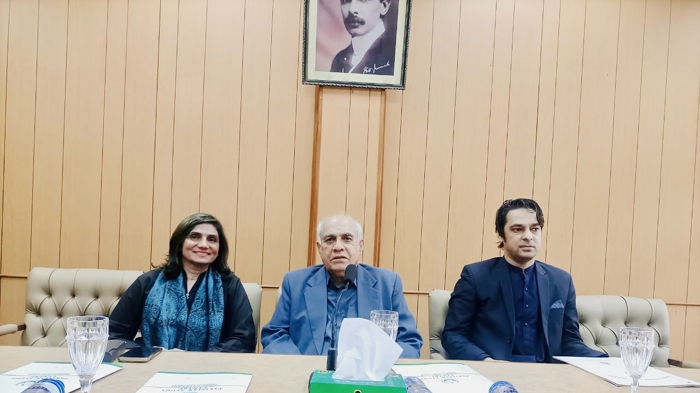
The Centre for South Asian Studies (CSAS), University of the Punjab, Lahore, organised a seminar titled, "Jinnah and Iqbal: Two Visions, One Destiny", in commemoration of the 150th birth anniversaries of Allama Muhammad Iqbal and Quaid-e-Azam Muhammad Ali Jinnah. The seminar highlighted their intellectual, philosophical and political contributions to the creation of Pakistan and explored the enduring relevance of their vision for the nation.
The keynote speaker, Prof. Tanveer Sadiq, a renowned columnist and distinguished intellectual, shared his insights into the vision, leadership and ideological foundations of Pakistan. He highlighted the complementary nature of Iqbal’s philosophical vision and Jinnah’s political leadership, explaining how their ideas and determination converged towards the establishment of an independent homeland for the Muslims of the Sub-Continent.
Prof. Sadiq further discussed the enduring relevance of Iqbal’s philosophy of selfhood, intellectual awakening and Muslim political consciousness, alongside Quaid-e-Azam’s constitutional struggle, democratic principles and unwavering commitment to the cause of Pakistan. The discussion underscored the importance of revisiting the intellectual and ideological foundations of Pakistan in the context of contemporary national challenges, particularly for the younger generation.
In her remarks, Prof. Dr. Naheed S. Goraya, Director CSAS emphasised the importance of promoting intellectual discourse on Pakistan’s ideological foundations and fostering a deeper understanding of the vision of its founding leaders. She appreciated the valuable contribution of the Keynote Speaker and reaffirmed the Centre’s commitment to organising academic activities addressing significant historical, political and contemporary themes.
The seminar also featured an interactive Question-and-Answer session, during which participants were engaged on various aspects of Iqbal’s philosophical thought, Quaid-e-Azam’s political vision and their relevance to contemporary Pakistan. The session provided an opportunity for meaningful intellectual exchange and academic engagement. The seminar concluded with an emphasis on translating the ideals of Iqbal and Jinnah into a collective commitment to national unity, democratic values, intellectual development and Pakistan’s progress.
|
